ΕΡΓΑΣΤΗΡΙΟΝ · From the Workshop
The Asian Captains
12 June 2026 AD · Year 7534 of the Roman World
The workshop has been quietly compiling, for months, a single document I now want to put in your hands. The Asian Captains is the full dossier of the military lords of Asia Minor as the campaign currently knows them — the magnates, militia-archons, frontier strategoi, and the field commanders whom a Laskarid claimant in 1205 might hope to bring under his banner in arms. It is, deliberately, a book about captains: the men who would ride out with a lance and a retinue. The clergy, the civic notables, the mercantile factors, the chroniclers and physicians and engineers — every other recruitable agent type in the game — belong to a separate dossier that the workshop is preparing now and will publish as its own From the Workshop entry in due course. This book is the soldiers' book.
It runs to a little over a hundred pages of facing-page portraits and prose, and it is the closest thing to the military manuscript behind the game that exists outside my own drive. I want to be honest about what it is and is not. It is not a strategy guide; the loyalty thresholds and gift affinities are not in it, because the game's job is to teach those through play. It is a chronicler's register of captains: who these men are, where they hold, what troops they bring, what they want, who they hate, what the sources say about them, and — for the invented ones — what historical military pattern they are standing in for. If you read it before playing you will know more than Theodore does on the morning he lands at Pylai. That is a choice I leave to you.
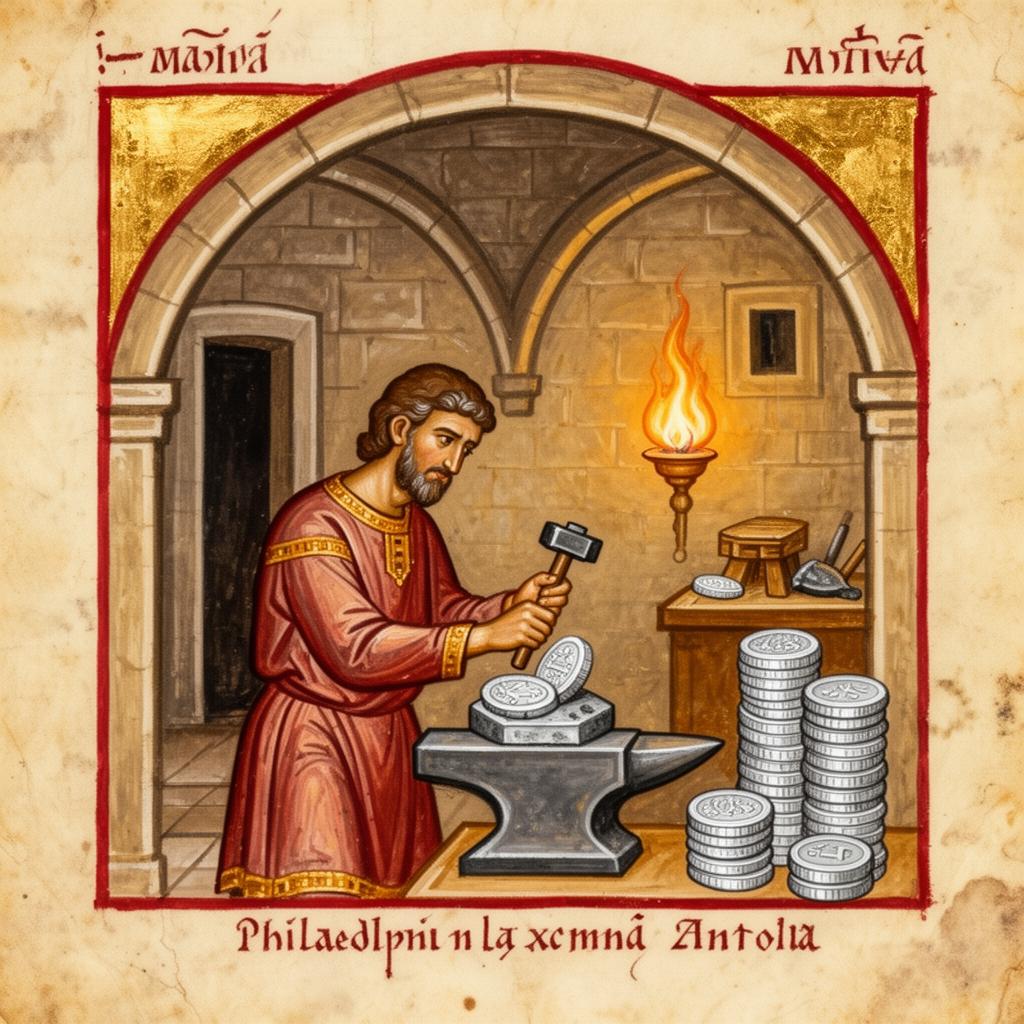
The design decision behind the dossier is the one I most want to talk about, because it is the spine of the whole military recruitment system. Every captain in the book is a lever, not a number. Theodore Mankaphas of Philadelphia is not 'a level 7 field commander with 600 troops and -40 loyalty'; he is the wool-merchant's son twice acclaimed emperor by his own city, freed from a Constantinopolitan dungeon by the Latin sack, who hates the Franks as occupiers and the Komnenoi as snobs in roughly equal measure. The lever that brings him in is not gold and not marriage alone — it is the Sultan at Iconium threatening his eastern wall. The day Kaykhusraw turns west, Mankaphas bolts. That is the entire entry. The numeric weights underneath are tuning; the lever is the design.
This is why each captain has a hiddenLore field as well as a public flavour line. The flavour line is what a courtier at Nicaea would say about him over wine. The hidden lore is what the chronicler knows — the merchant origin, the Türkmen ghazis, the chains, the silver coinage struck in his own name. The game reveals the hidden lore only when the lever clears: when Mankaphas finally swears, you learn why he was always going to. Military recruitment in 1204 is not a charm check. It is the slow uncovering of a man whose price was never the price you thought.
Three design rules govern who is in the book and who is not. First — and this is load-bearing — the rivals to the purple are not recruitable as captains. David Komnenos has a full portrait and a full hiddenLore entry in the dossier, but he is marked `recruitable: false` in the source and will never ride at the head of a Laskarid tagma. The Komnenoi of Trebizond are co-claimants to Rome, not Bithynian magnates waiting for a patron, and pretending otherwise would collapse the whole geopolitical question the campaign is built around. He is in the book because you need to know him; he is not in the recruitment pipeline because the history will not allow it. The same is true of Henry of Flanders, who is in the dossier as the most dangerous Frank in Romania and will never wear the Laskarid eagle.
Second — every recruitable captain has a burn condition as well as a recruitability condition. Besiege their keep, push their anti-Laskarid meter to its ceiling, let them submit to the Latins, and the door is permanently closed. The chronicle entry on their page goes black-bordered. The dossier shows you the door; it also shows you the lock. A campaign in which you have burned Mankaphas, Maurozomes, and Asidenos is a campaign in which the Maeander frontier will not be held by oath and you should plan accordingly.
Third — invented captains are clearly marked and always stand in for a historical military pattern, never filling a slot the period left vacant by accident. Leon Branas, the militia-archon of Philadelphia who activates only when Mankaphas dies, is invented from the documented pattern of the Philadelphian commune that kept the city as a defensive Greek enclave through the long thirteenth century without ever again proclaiming an emperor of its own. The Branas of the militia-saints is the spiritual heir of the demos that raised Mankaphas the first time, but without the merchant ambition that twice put him in the purple. The dossier says so, in plain language, on the page. The liberties are admitted to be honest — the unwritten contract of the previous workshop column applies here in full.
A few small craftsmanship notes that may interest no one but me. The portraits in the dossier are derived directly from the recruitment-scene paintings in the game (the Philadelphia mint plate for Mankaphas, the Maeander dawn plate for Asidenos, the Chonai garden plate for Maurozomes) so the face and dress the player sees at the moment of oath are the same face and dress on the page of the book. The heraldry — field colour, charge colour, device — is rendered to the same five-step ink scale the chronicle UI uses, no Latin tinctures, no impossible metals-on-metals. The Greek names are in the form Niketas Choniates himself would have used; the Latin names are in the form Geoffrey of Villehardouin would have written. Kontostephanos is Kontostephanos, not Constantine. Pierre de Bracheux is not Peter of Braiecuel.
I would value, very specifically, three kinds of feedback on the military book before the agents book follows it. Are the levers legible — can you read a captain's entry and predict, roughly, what would have to be true in the campaign for him to come in? Are the burn conditions fair, or do any of them feel like they would punish a player for an action the game has not warned them about? And — most importantly — is there a captain, recruitable or otherwise, whose absence from the book you find startling? The dossier is a working document. The next workshop column, on the non-military agents, will be shaped in part by your letters on this one.
Click below for the PDF. Take it slowly; the empire is in no hurry.
Continue the chronicle
If you would like the next entry delivered, join the mailing list. One letter a month at most. Or write back — questions are answered in future entries at matthew@mrassociates.co.uk.